I spent an afternoon at my friend's mini-farm yesterday, experimenting with different cultivation methodologies.
My friend had moved away from using small cultivation tanks for a long time. Currently, his plants are laid in plastic baskets with water spraying down and splashing at them 15 minutes every hour using a pump connected to mechanical timer. This will ensure that the plants are sufficiently wet, or at least keep the humidity level high around these concrete ponds.
Before letting your imagination run wild thinking that all the plants shown in the above photographs are cryptocorynes, I better inform you that they are not. Most of them are actually bucephalandra. Let your imagination run wild now if you are a bucephalandra fanatic! The below photograph shows one of the very rare mutated monster bucephalandra under his collection.
As you can see from the below photograph, my friend is trying out using used active charcoal filter media (free of charge, left over from adjacent fish farms) as substrate instead of soil-based substrate for some of his cryptocorynes collection.
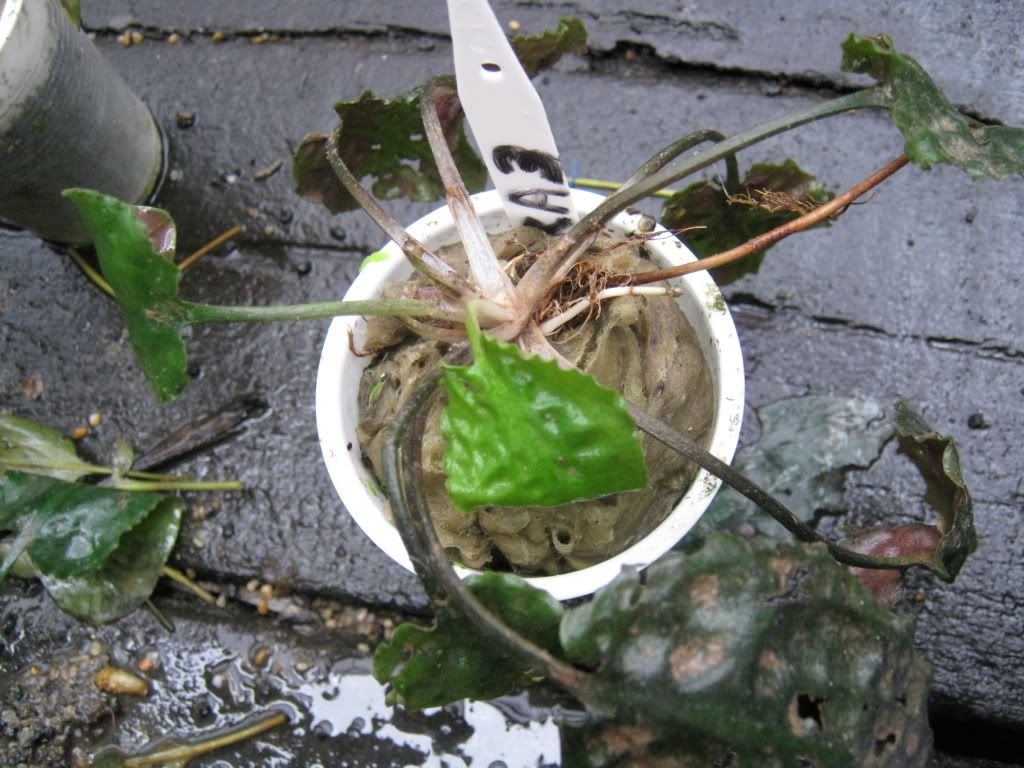
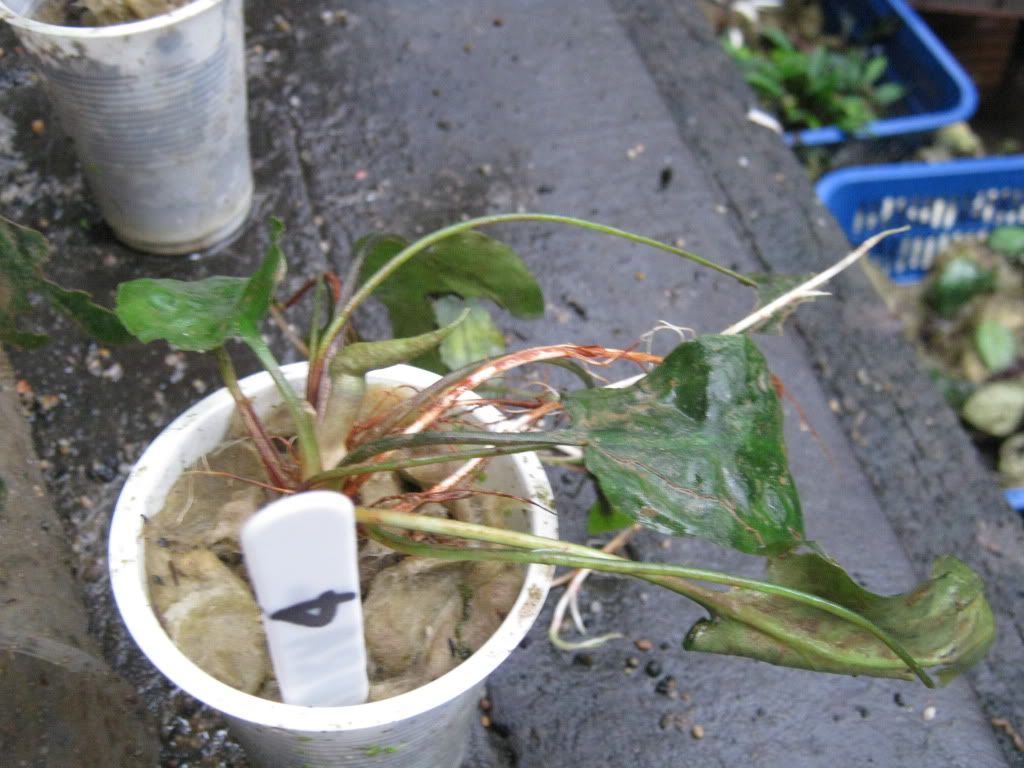
The below photograph shows another trial using rock wool as substrate, again instead of soil-based substrate.
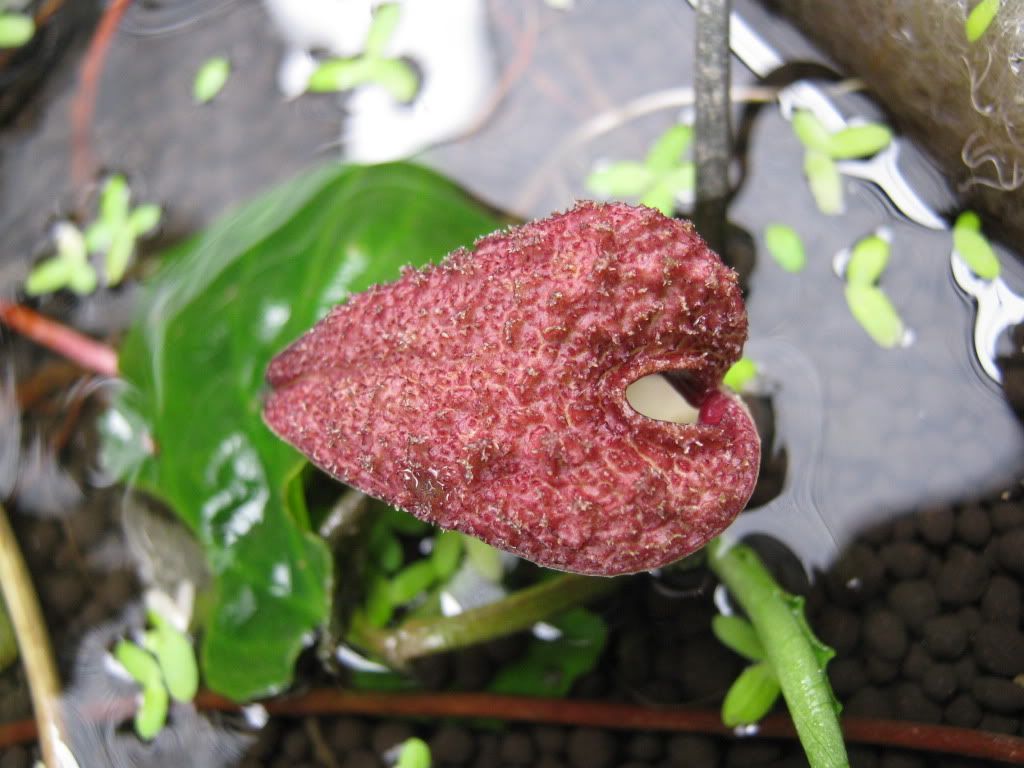
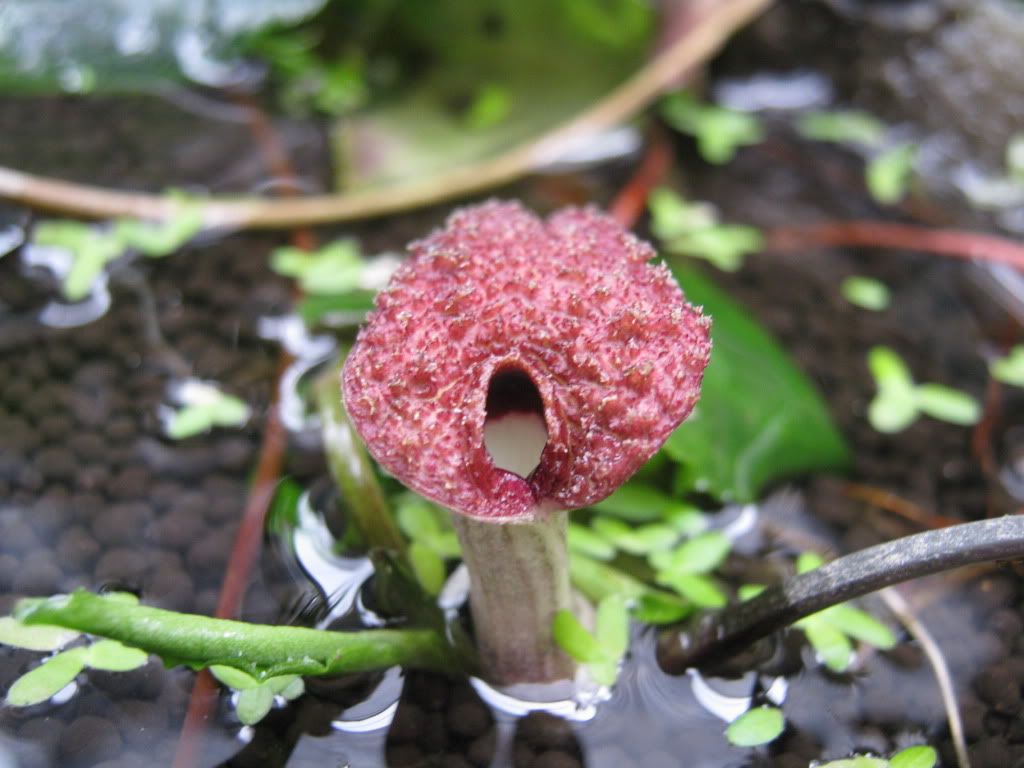
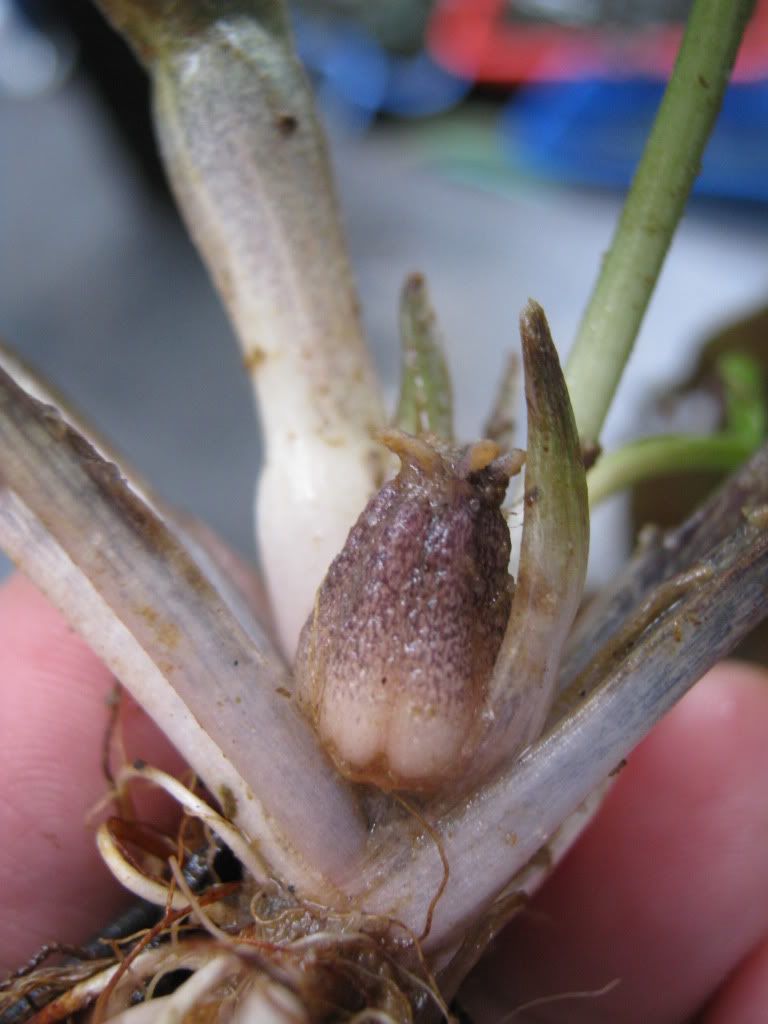
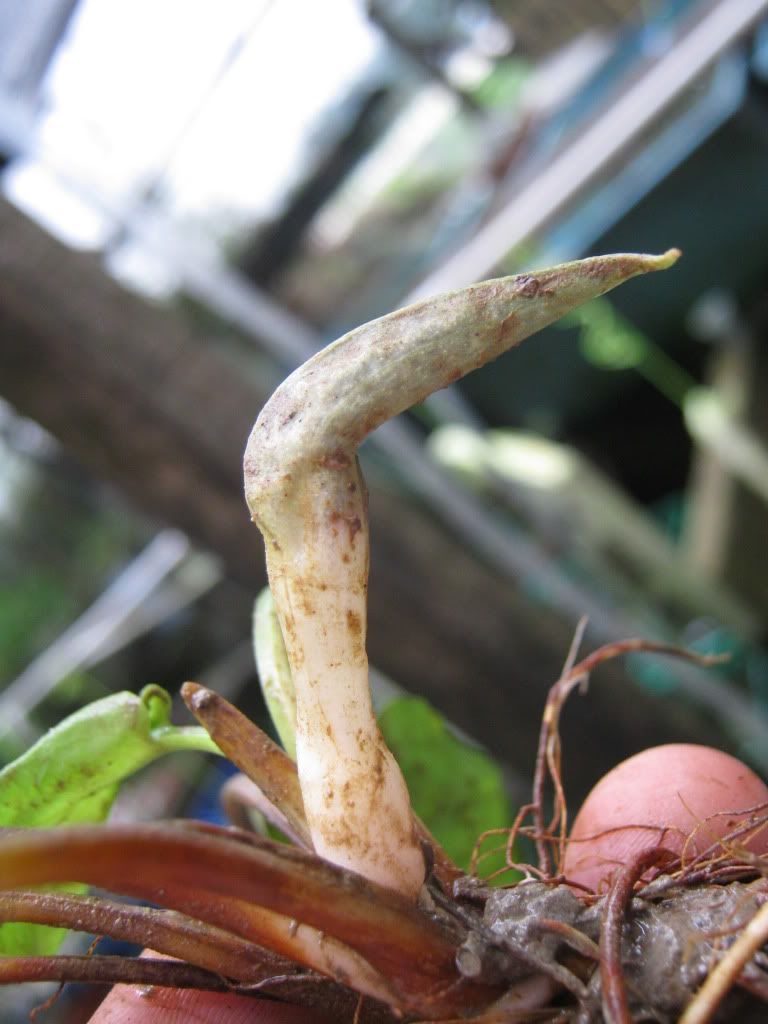
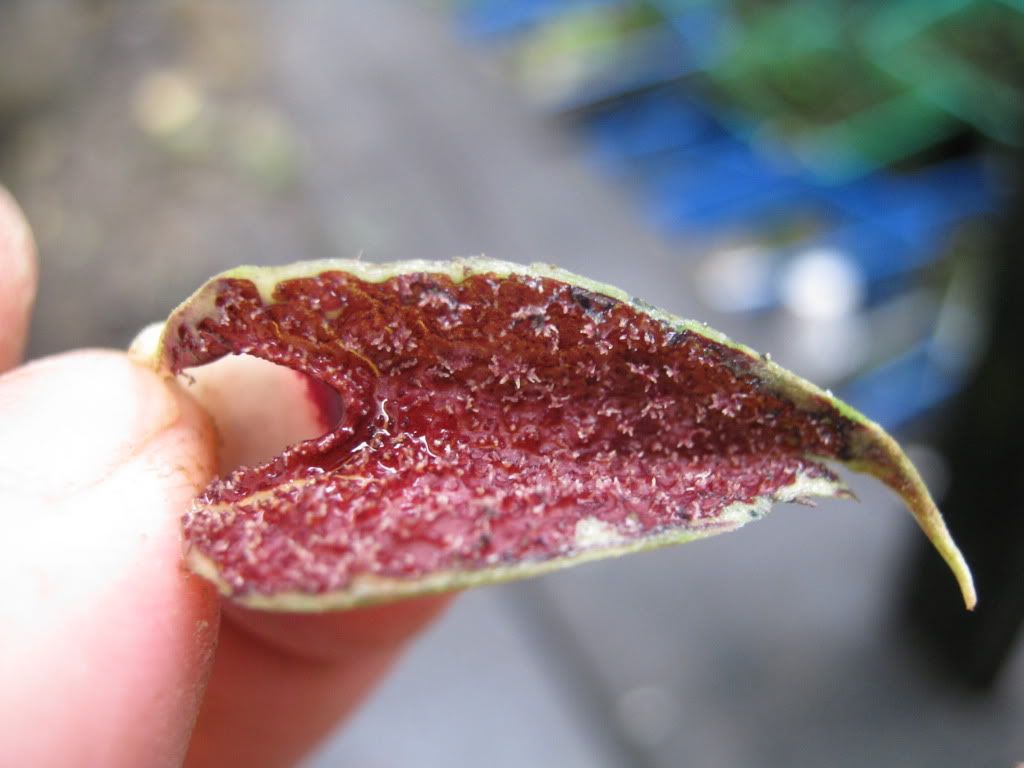
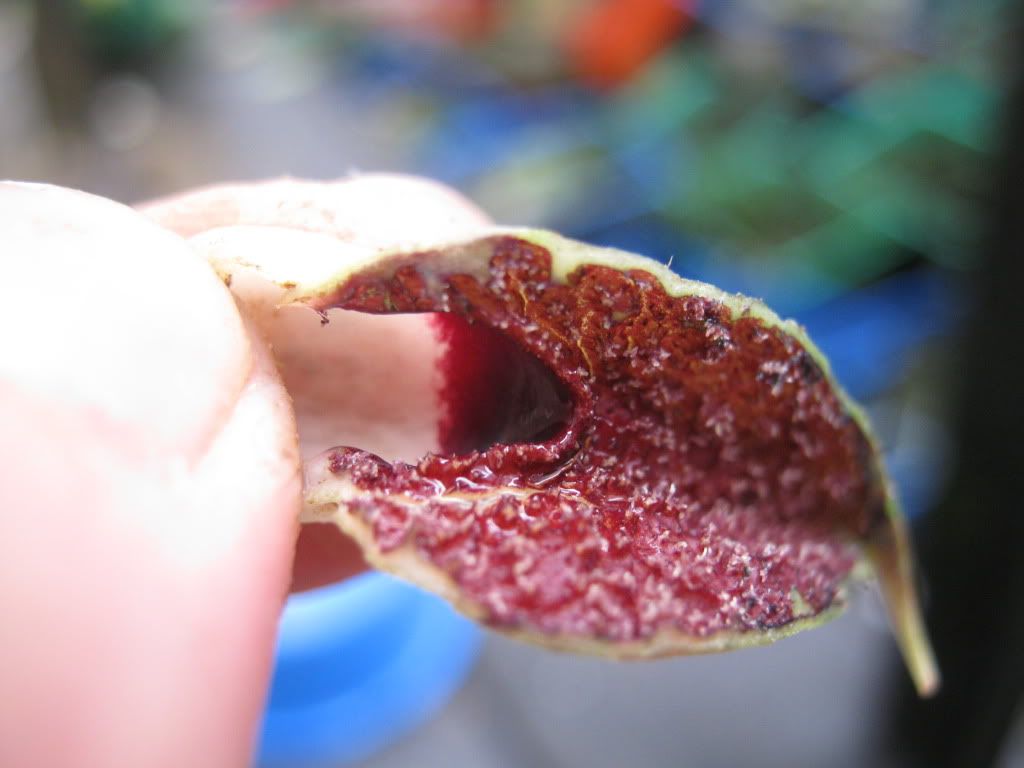
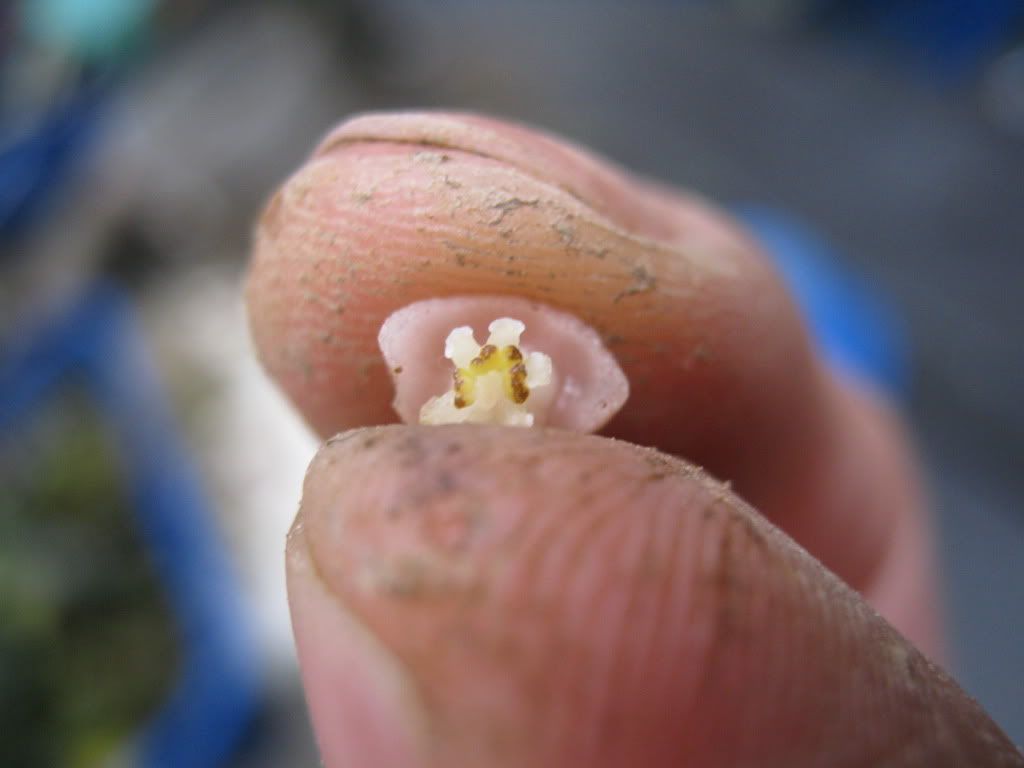
Some specimens of C. striolata collected from west Kalimantan by my friend are currently being cultivated just by placing them on a layer of rock wool. We spotted a beautiful budding spathe with yellow tip.
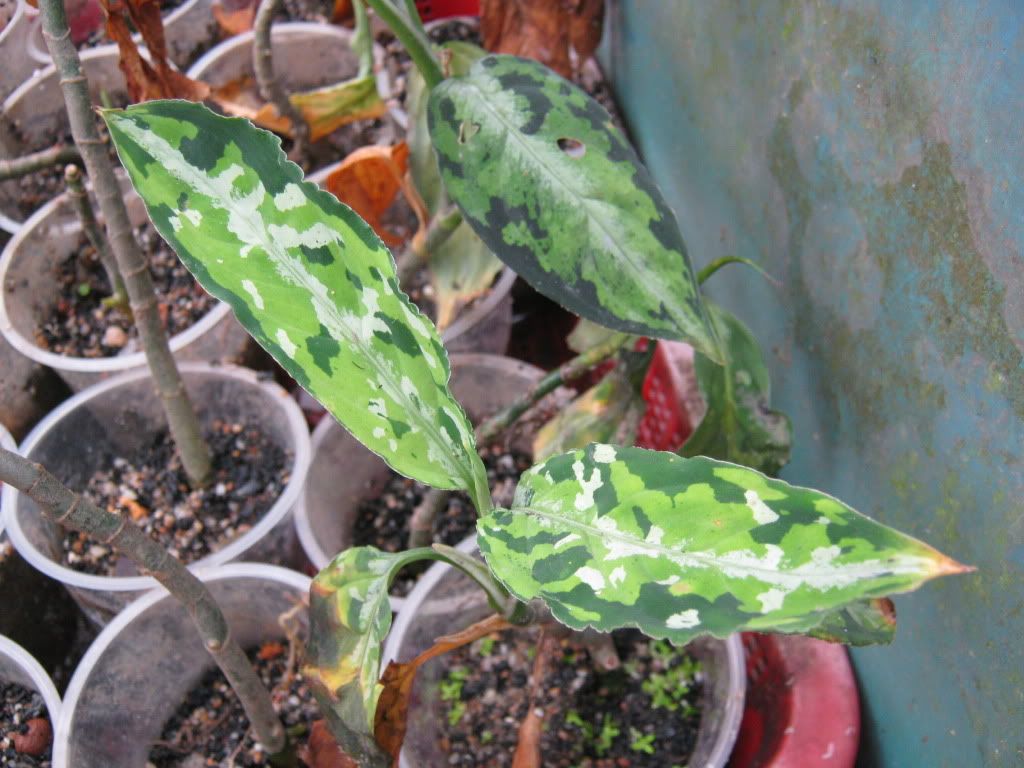
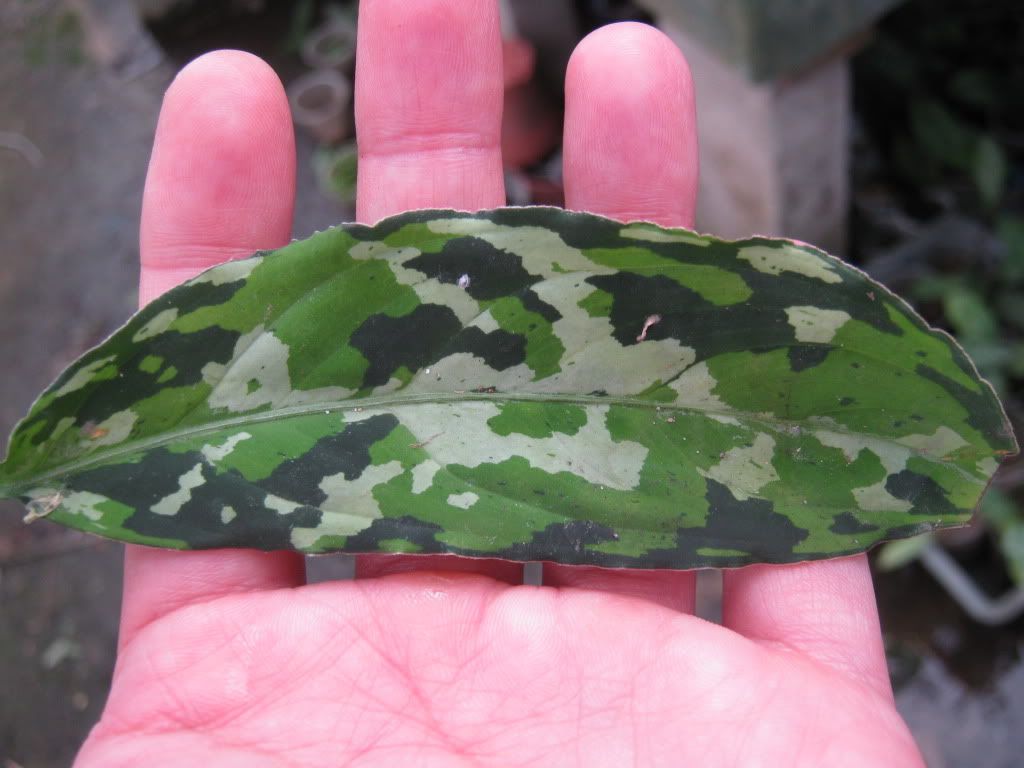
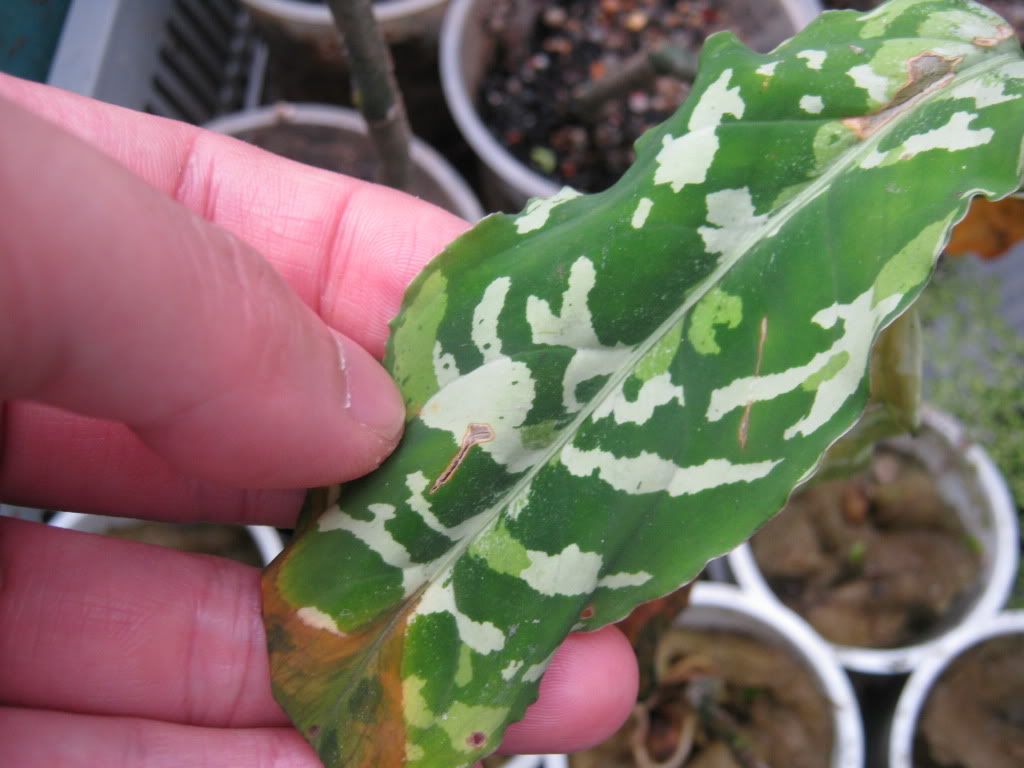
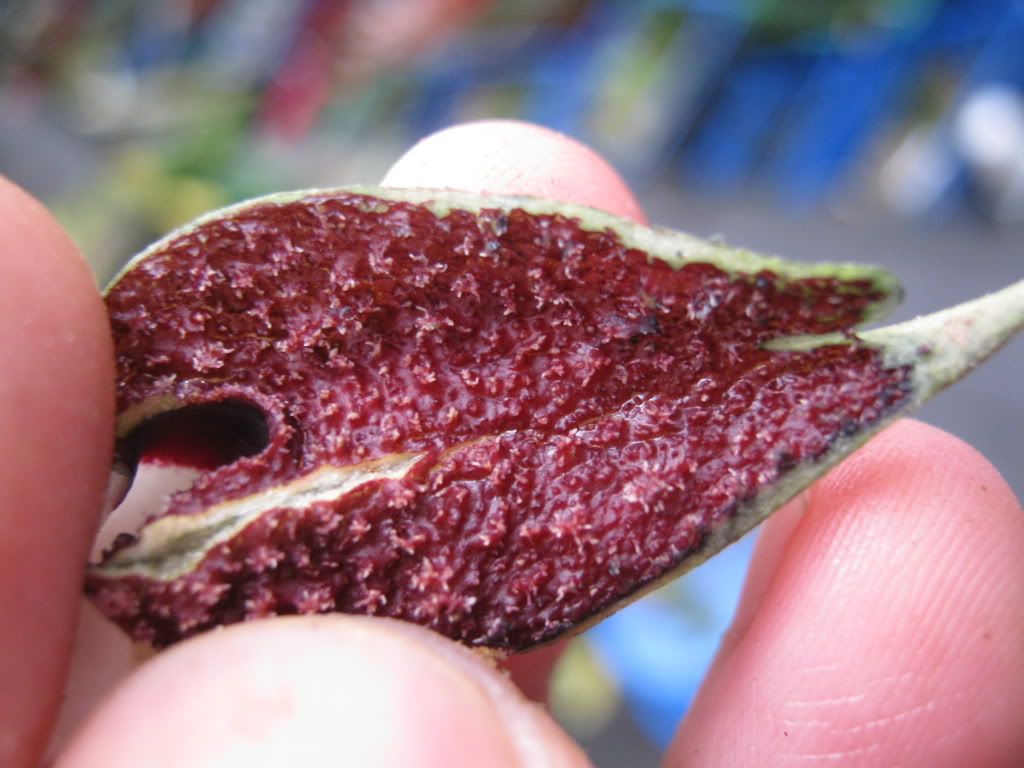
The leaves of these C. striolata specimens are quite beautiful too.
There were some fibre tanks which are filled with higher levels of water. Some cryptocorynes cultivation trials are being conducted here too.
My friend was kind enough to let me have a small space in one of such tanks to play around with my own cryptocorynes. I selected a few pots of cryptocorynes from my home's cultivated tanks to be relocated here instead, hoping that the change in environment (i.e. water condition, water level, temperature, humidity, etc) will spur these pots of cryptocorynes to exhibit better growth as compared to their current lacklustre performance.
I also lined a basket with filter sponge and filled the space with "aquarium soil" to see whether the increased permeability (i.e. allowing for more water to flow through the substrate as compared to those in pots with only a few holes at the bottom) will improve the plant growth or not.
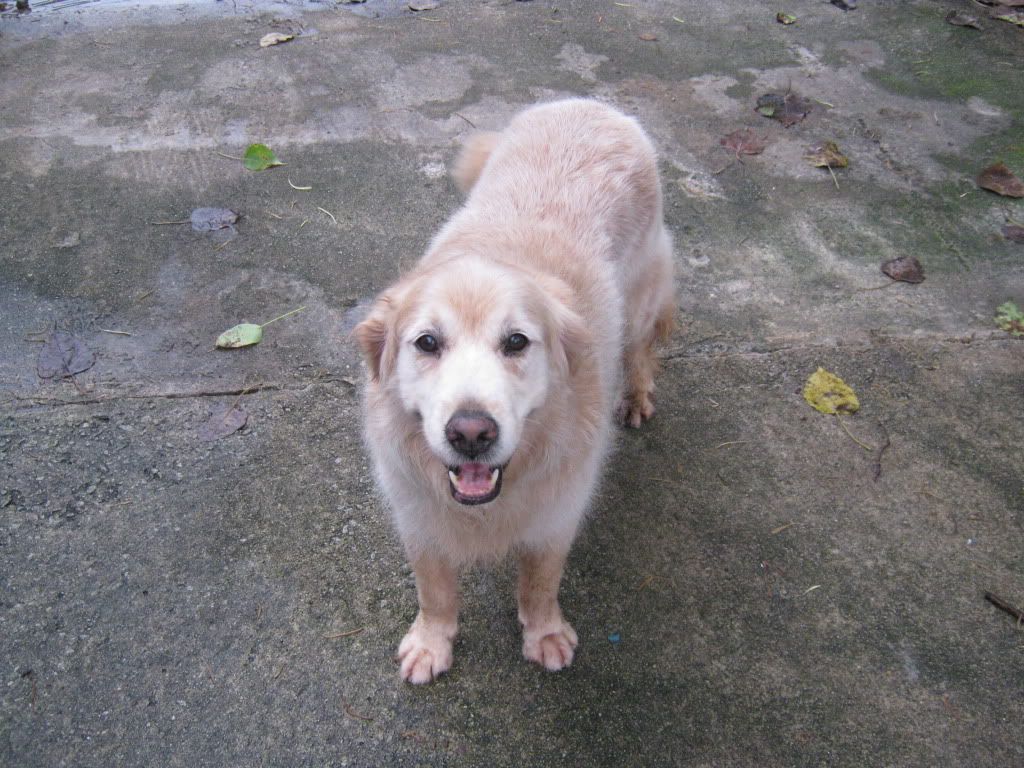
Hopefully all these changes above will prove to be beneficial to the plants. My friend is also lucky to have beautiful show dogs from the neighbouring farm to help him to guard his mini plant farm free of charge.