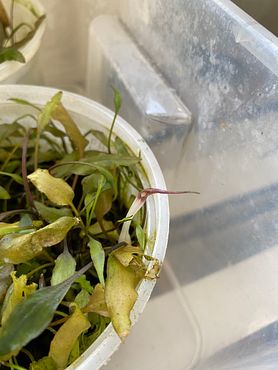
I have seen C. ciliata countless times during my numerous past field trips to Malaysia and Indonesia but I just did not have the luck to locate the spathe at all. Therefore when my explorer friend told me that he had spotted the spathe of C. ciliata in Mr Teo's farm yesterday, I immediately arranged with him to visit the farm today to see it myself.
Mr Teo's farm (
click here to read past posts with photographs of Mr Teo's farm) consist of large concrete tanks filled with soil / mud / sand and fertilised using chicken poo.
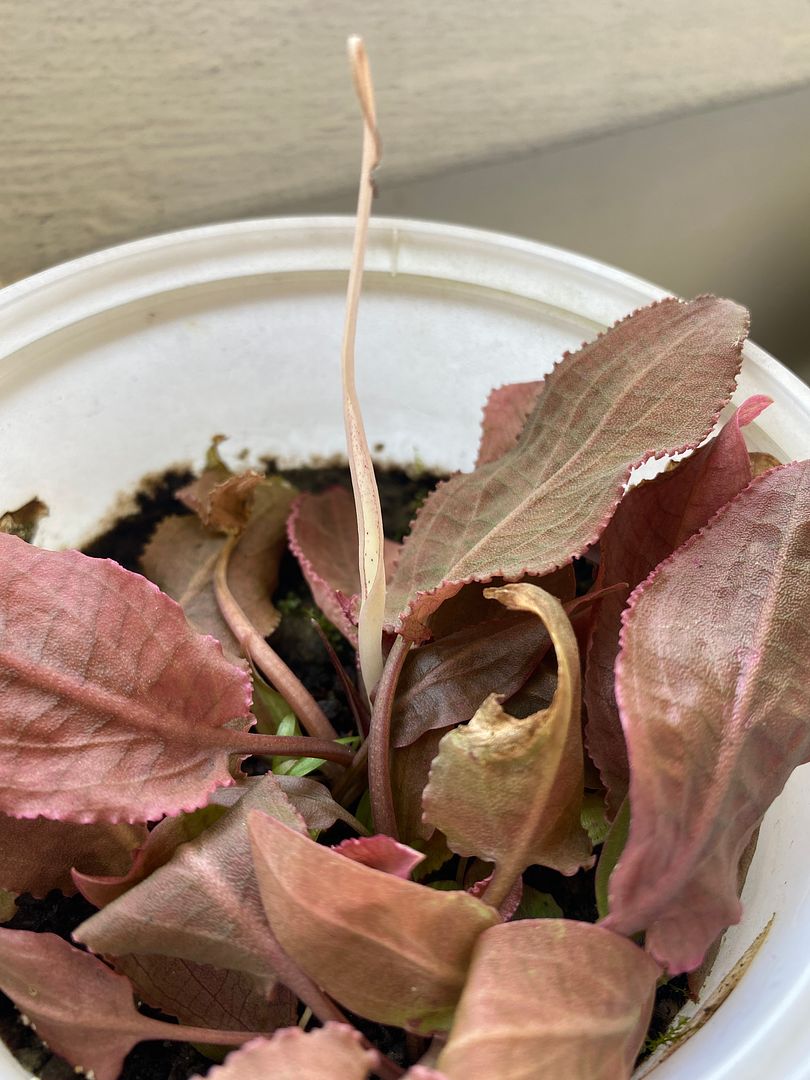
Some of the tanks have shallow depth and can be used for emersed cultivation only while others have sufficient depth to be filled with water for immersed cultivation as well. The C. ciliata specimens were grown emersed and there were many blooming specimens with spathe at varying stages.
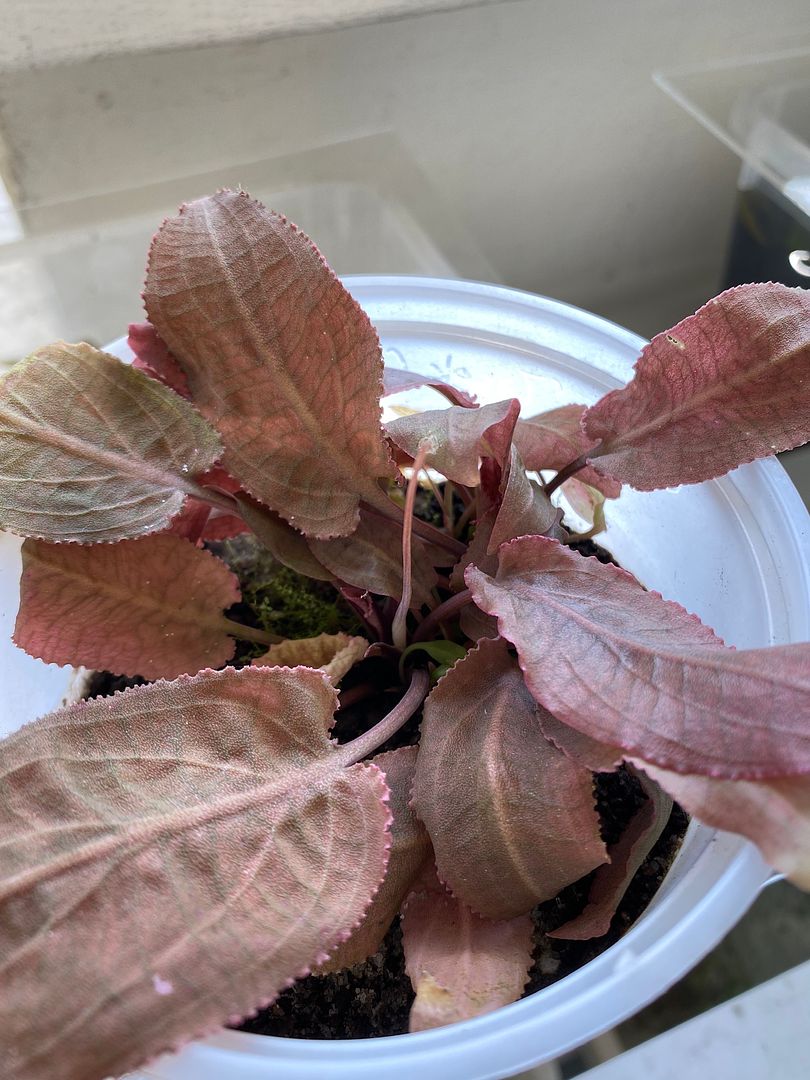
The specimens should belong to C. ciliata var. latifolia due to the broader leaves and presence of multiple upright offshoots around the base of the plant.
The limb is reddish in colour with pronounced yellow raised rim at the collar area. The yellow colour spreads outwards from the collar area to the limb by forming yellowish bulges on the surface of the limb. The throat is white in colour speckled with red spots.
One of the main characteristic of C. ciliata are the cilia which are hair-like or thread-like structures growing along the edges of the limb.
The cilia could not be seen on the external of the new spathe which is not opened yet so they should be developing internally. I should have cut open the limb section to take a look at what is happening during this stage but I forgot...
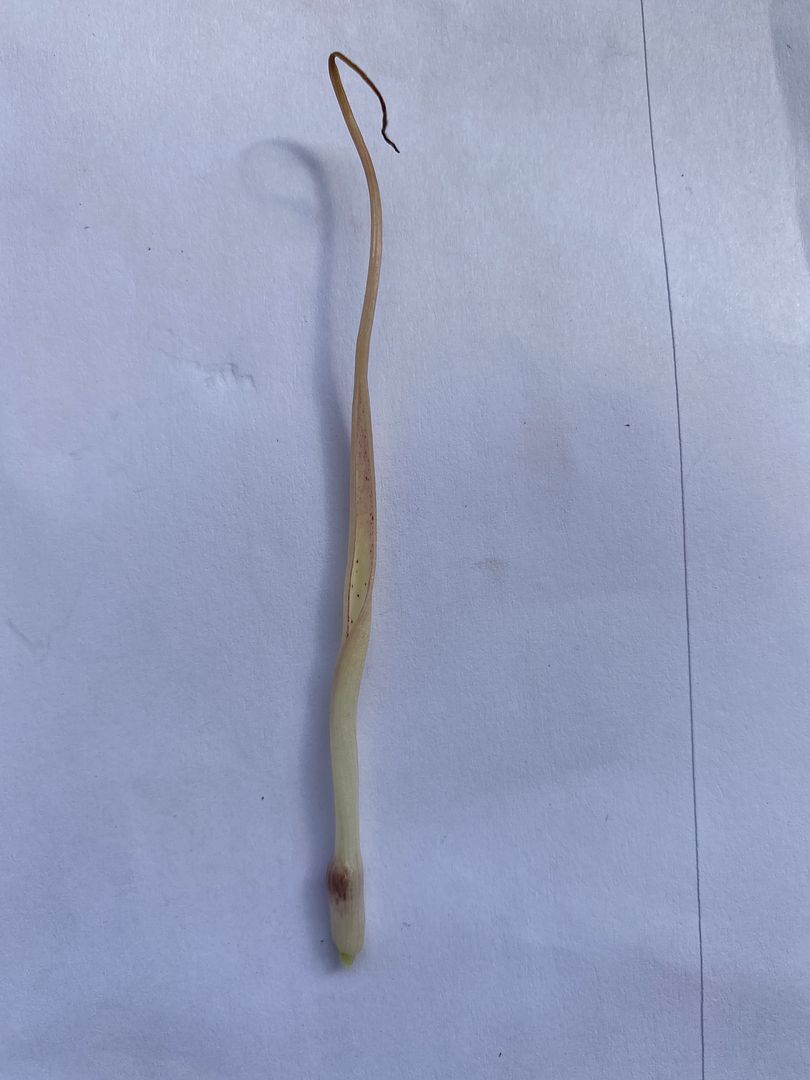
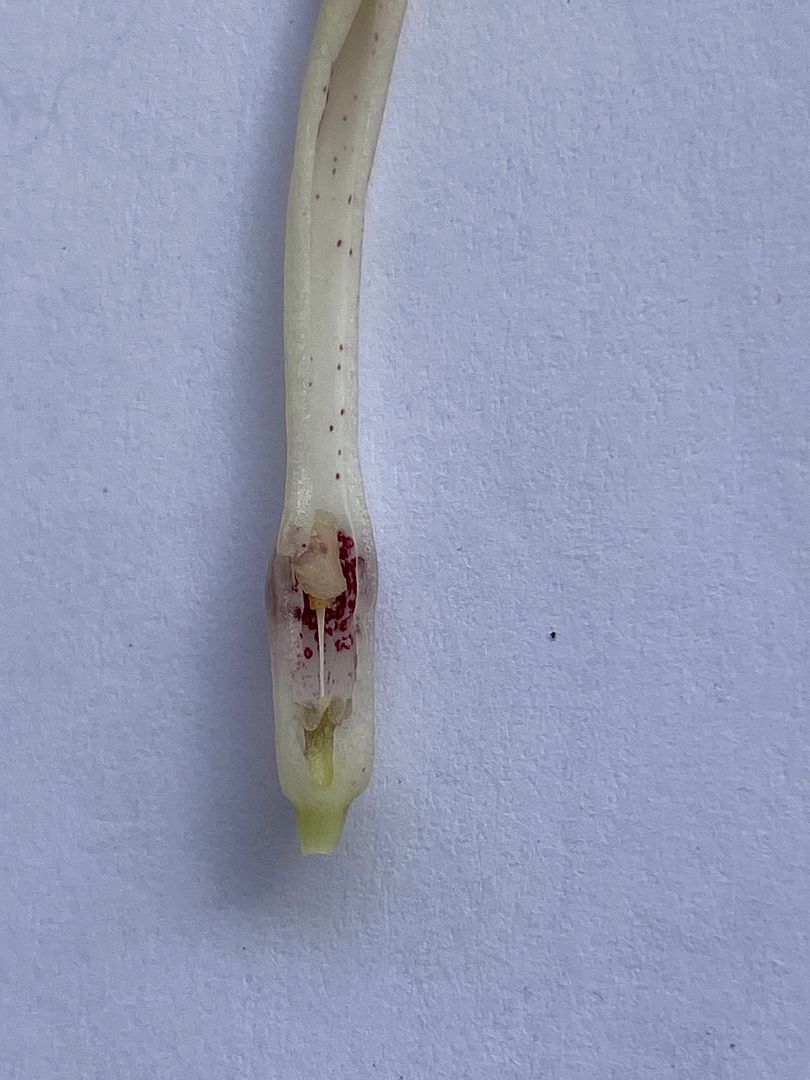
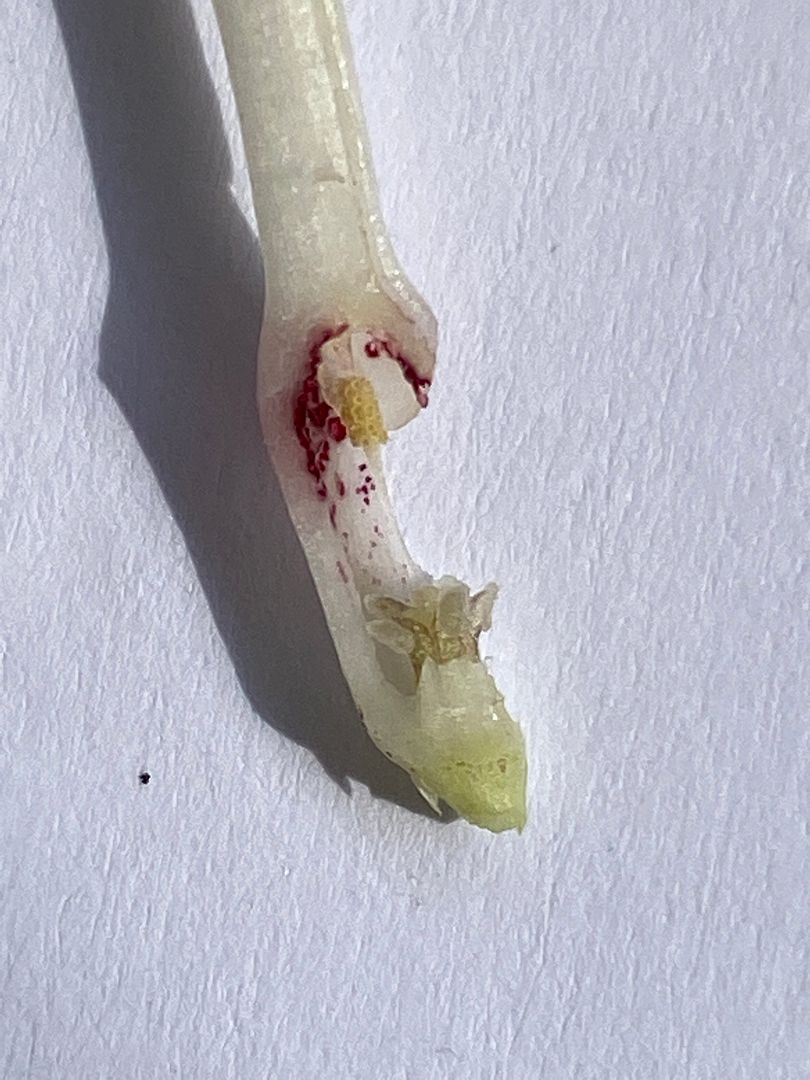
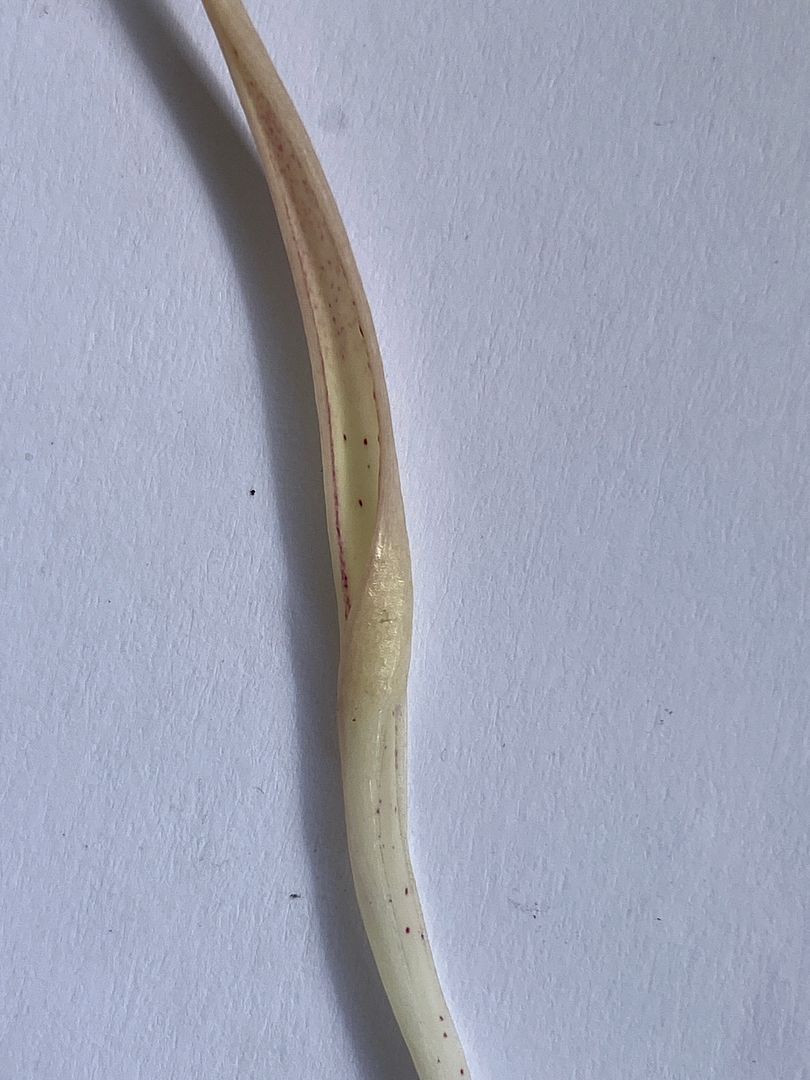
As usual, we cut open the kettle section to observe the male and female sections of the flower. The kettles are rather protected by the base of the leaves and we need to bend the leaves down to expose the kettle and the peduncle sections.
Both kettles which we cut had dead insects trapped inside. The kettles' "skin" are rather thick and fibrous as I was the one cutting them open with a pen knife. The typical lack of style with the stigma sitting on the ovaries could be observed as well.
Finally, I managed to see no just one but many spathes of C. ciliata after so many years of interest in cryptocorynes.