At many of the habitats of C. affinis, snails such as the ones shown below can be found living in the water among the cryptocorynes. My explorer friend told me that these snails often end up as food for the larva of fireflies.
Can you spot the similarities?!?!?!? Hahahaha. How did the genes of the snails get transferred into the cryptocorynes???
Showing posts with label C. affinis. Show all posts
Monday, February 21, 2011
Sunday, February 13, 2011
C. sp. 'Pahang 1' revisited (mini C. affinis?)
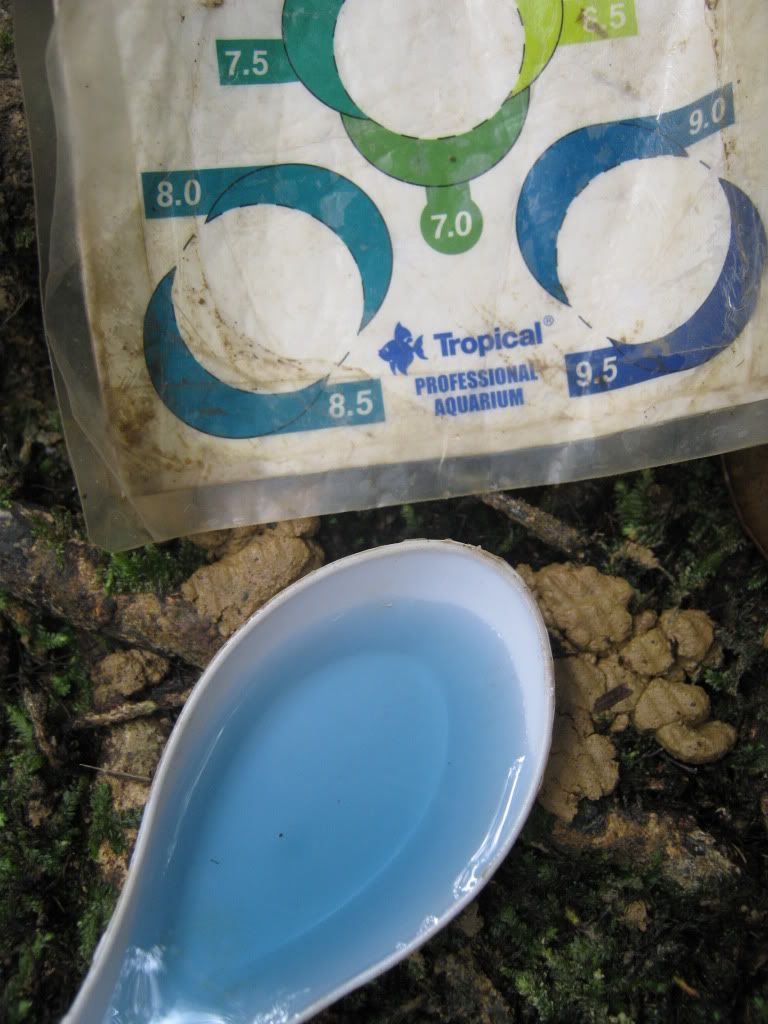
I revisited the habitat of C. sp. 'Pahang 1' at the northern part of Pahang. The water in the large river is at almost the same level as when I first visited it more than 2 years ago. Both emersed and submersed specimens could be found growing along the banks of the river. No spathes could be found at all again. The cryptocorynes were growing among the fine roots of the trees along the banks making them very difficult to collect. The pH was surprisingly rather high at about 9.0.
Could these be miniature C. affinis judging from the looks of the leaves as well as the location the were found? They have great potential to be good foreground plants for planted tanks!
Sunday, February 6, 2011
C. affinis 'West Pahang - Metallic Red'
West Pahang area was really a kingdom for C. affinis. During our recent trip there, we found quite a few different locations with C. affinis. I will try to follow how my explorer friend named the C. affinis found at the various locations based on their local variation characteristics so as not to create further confusions.
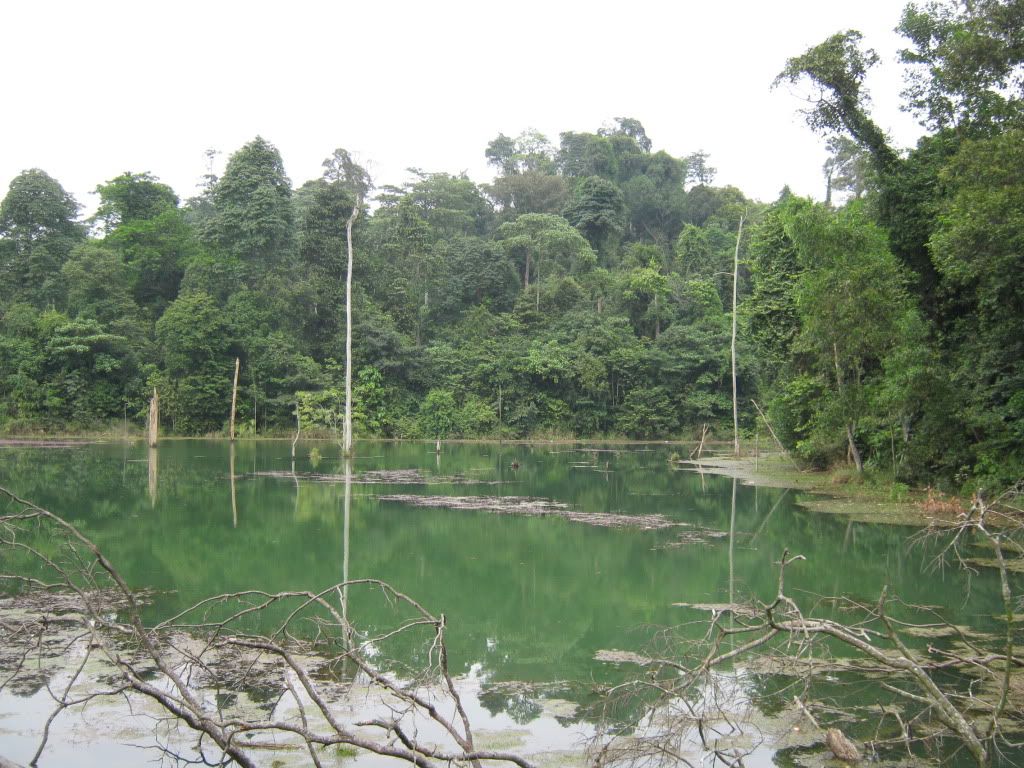
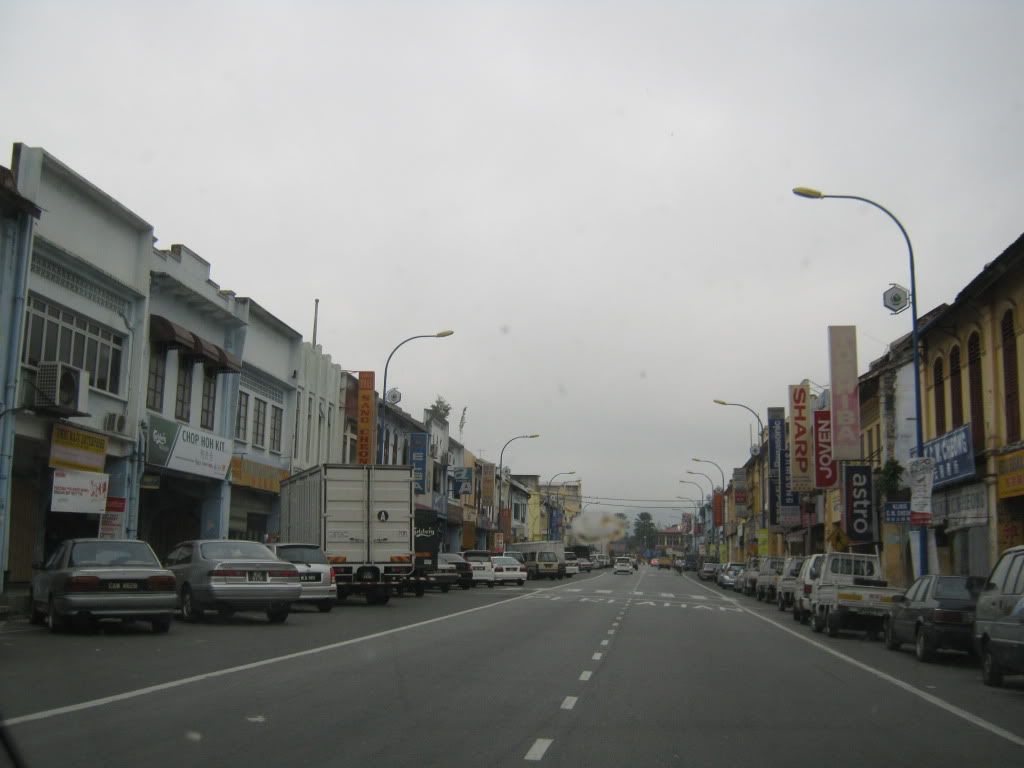
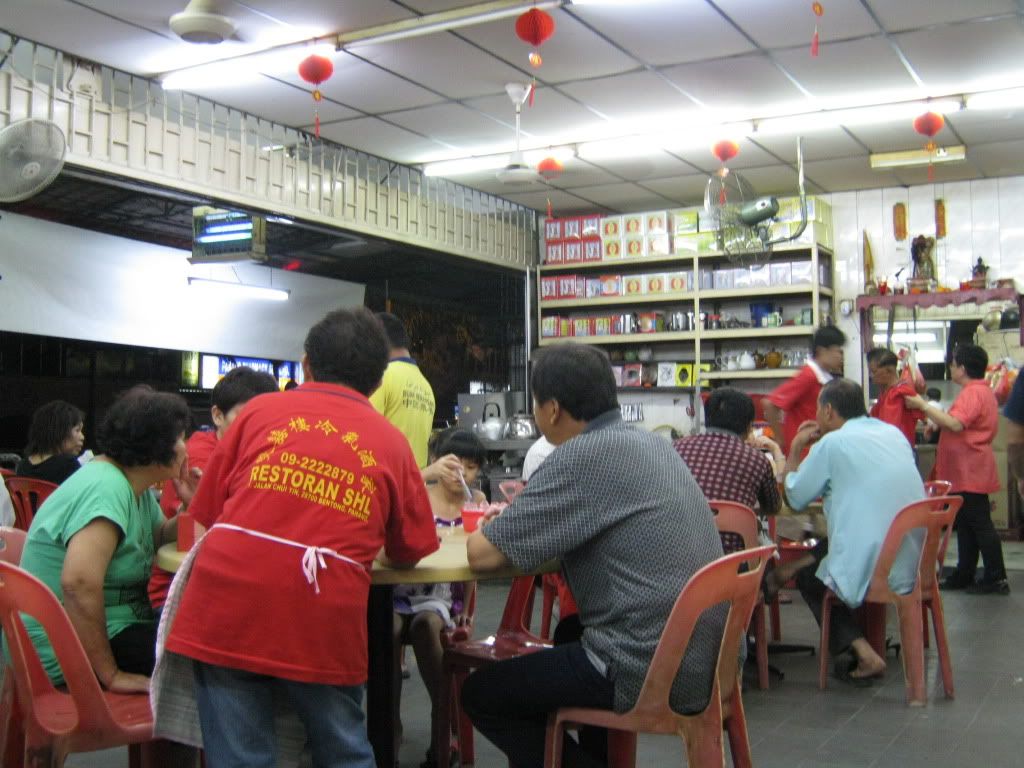
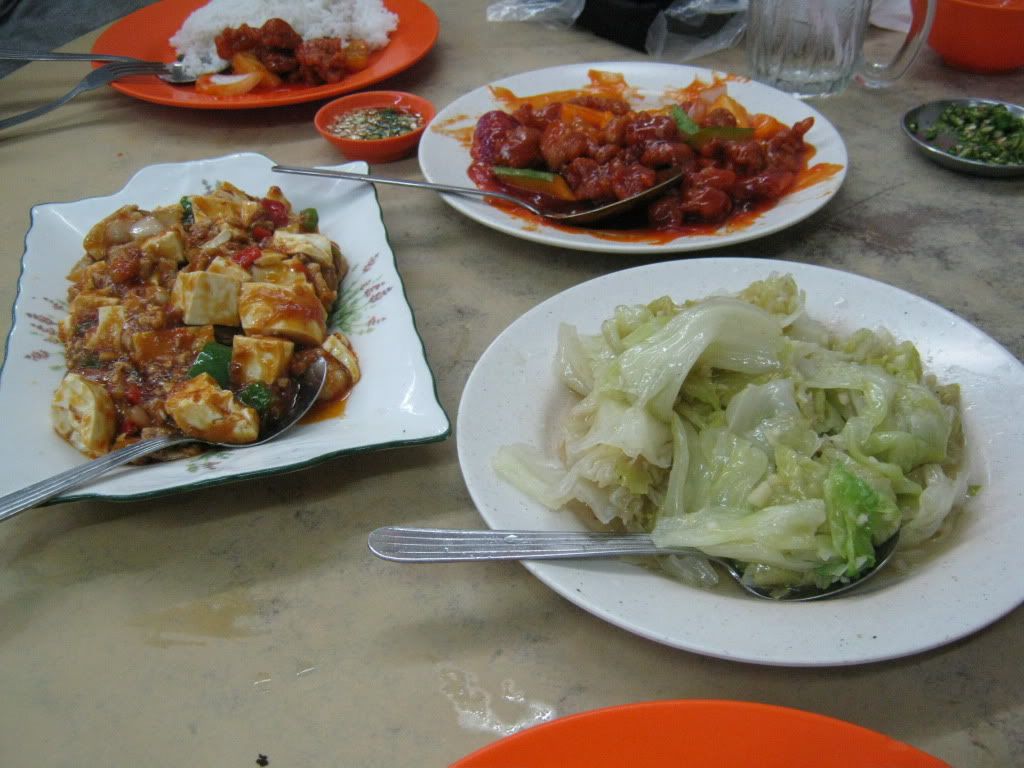
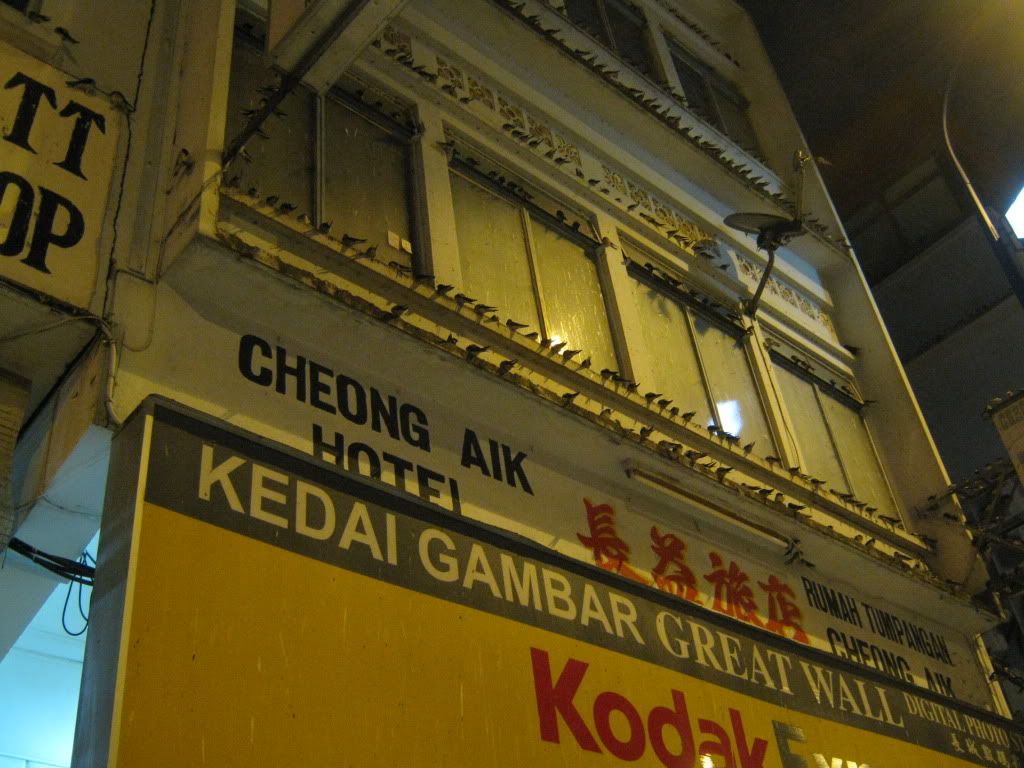
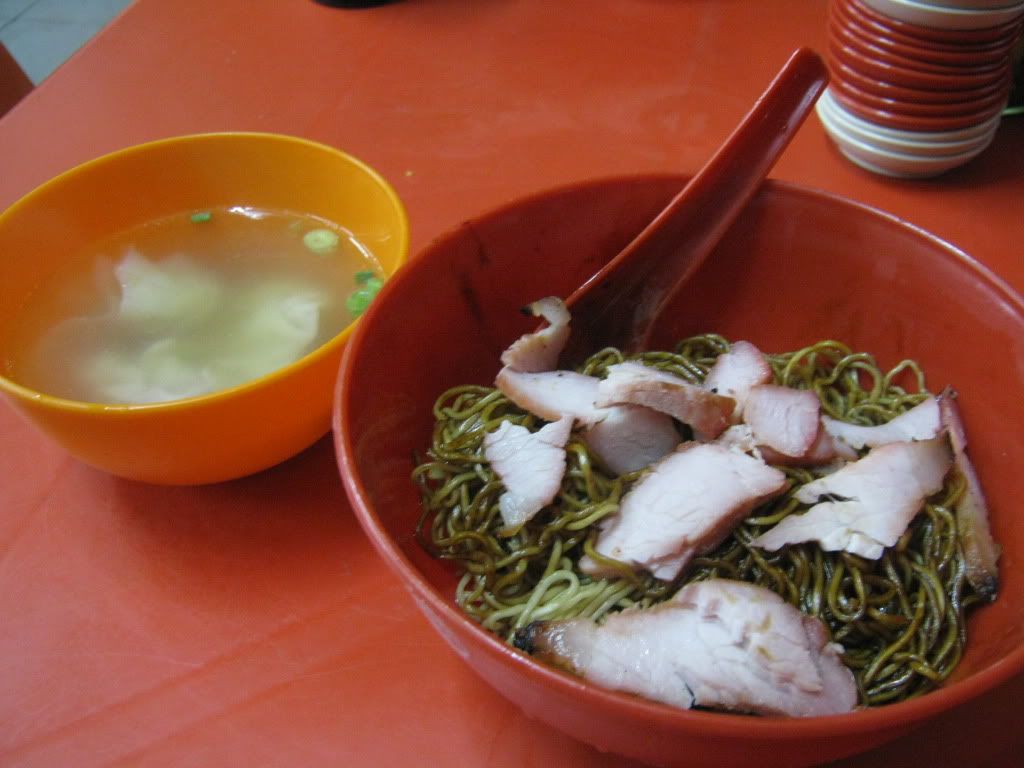
Pahang was rather far from Singapore and we spent a day travelling up to Pahang and staying over for 1 night before commencing our pre "Chinese New Year house visiting" to the various cryptocoryne habitats. After visiting a fresh water lake with "sea-side" banks and a flooded swamp forest, we stayed over at a town flooded with swallows and had dinner and breakfast at the local Chinese coffee shops there.
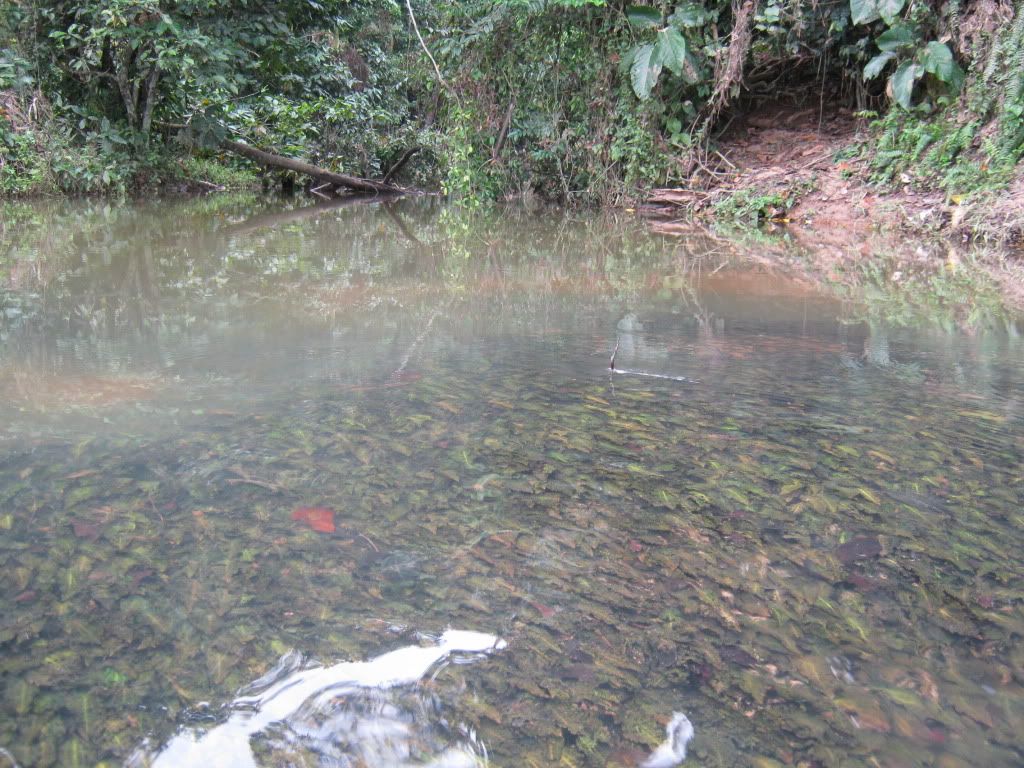
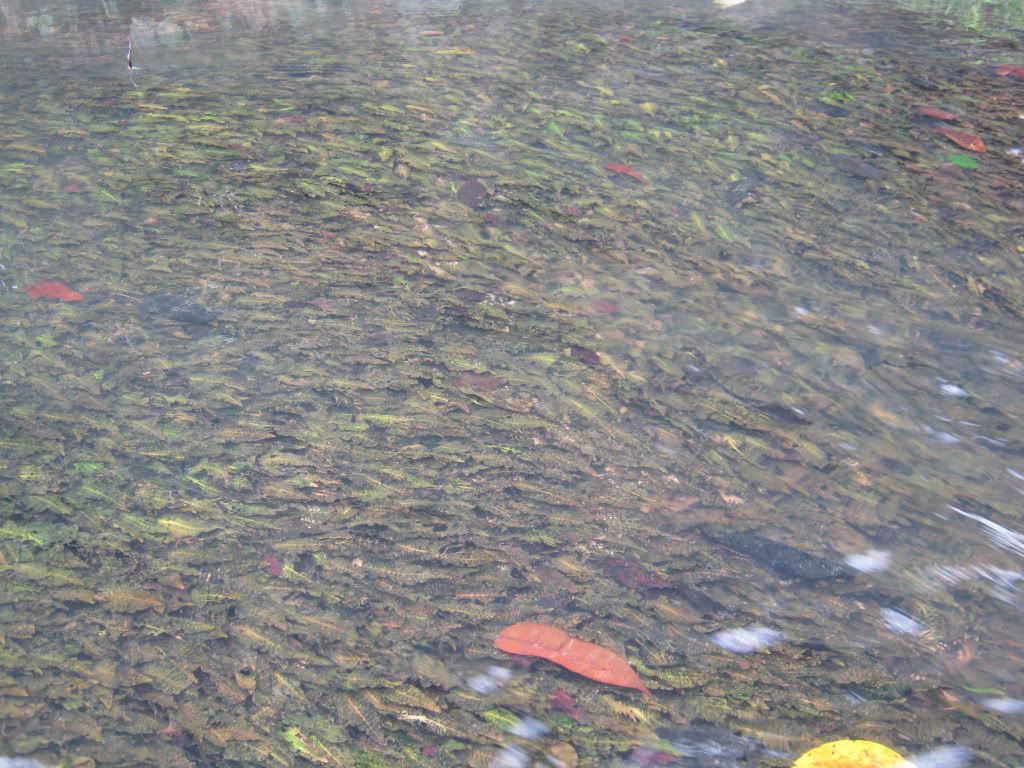
The first location my friend brought me to visit was the habitat of what he termed as C. affinis 'metallic red' based on the colour of the leaves of the specimens found there. It was a river flowing out of a forest with rather fast flowing water. Carpets of C. affinis could be found in this river.
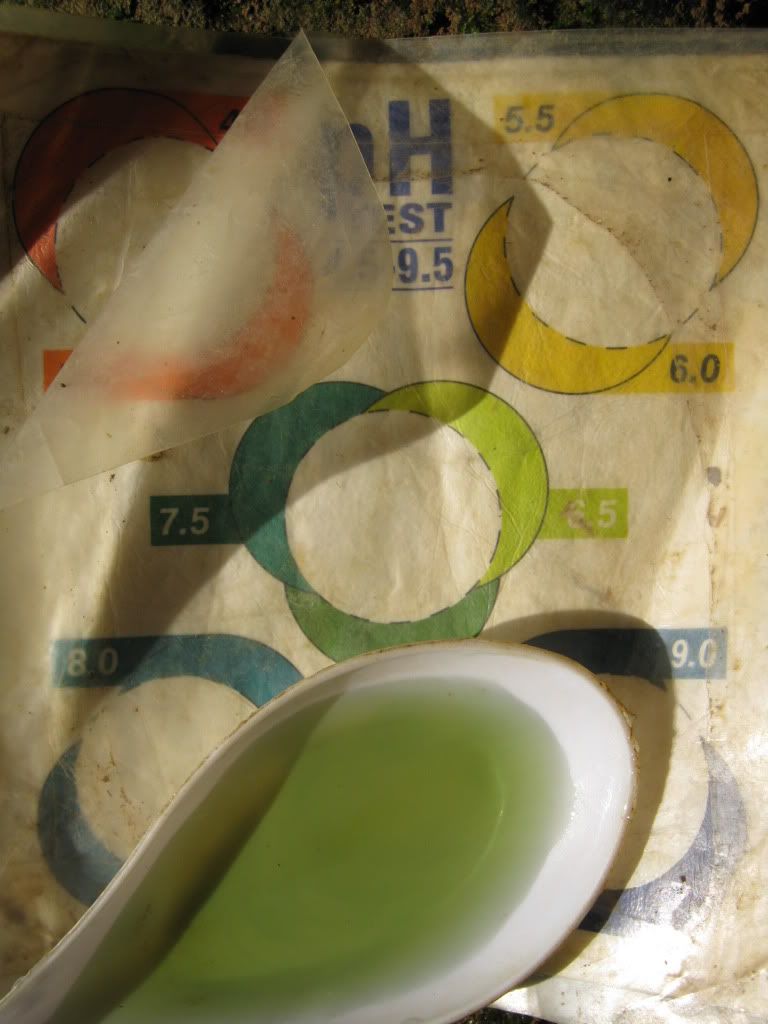
The river had fine sandy base and a neutral pH.
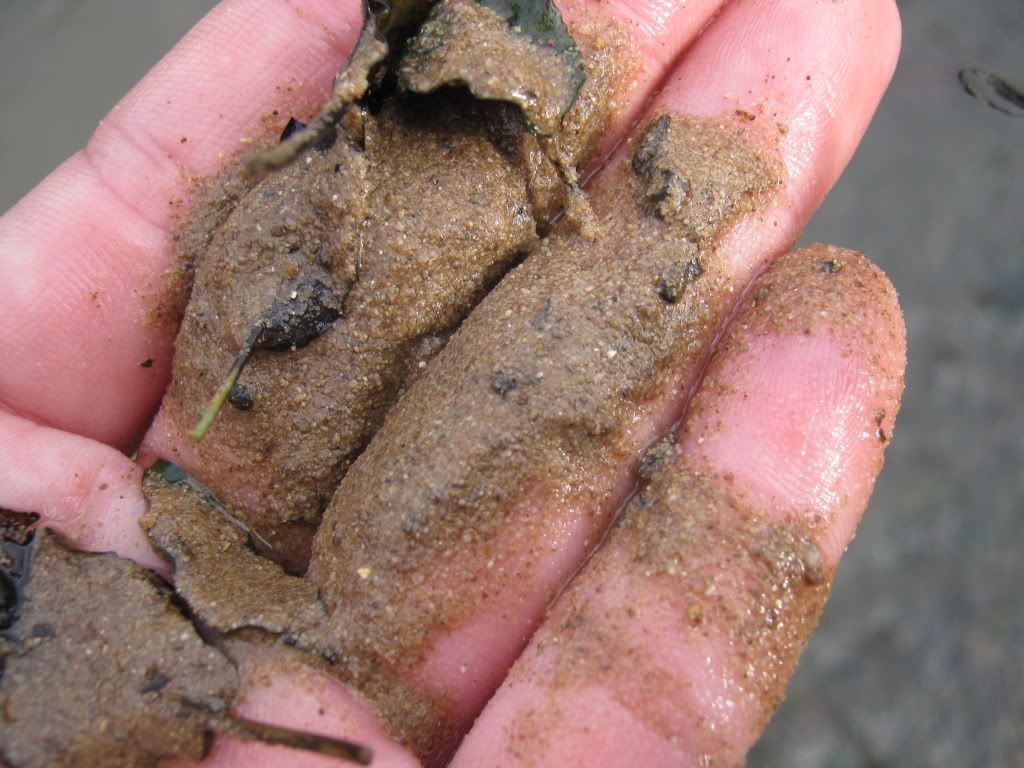
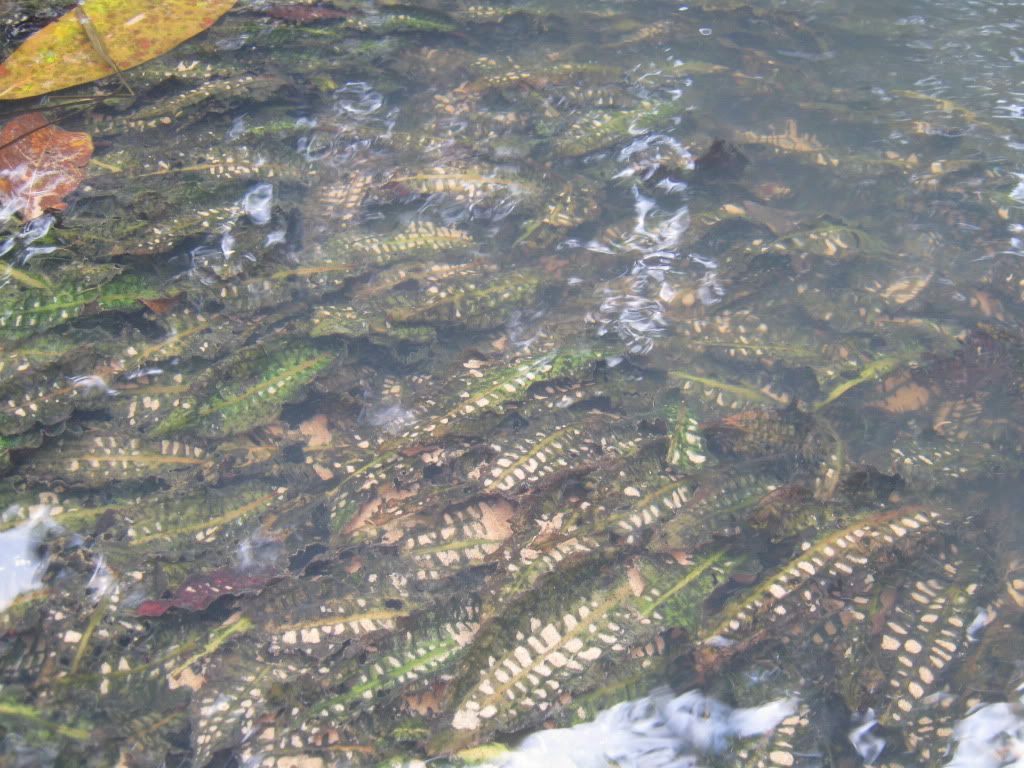
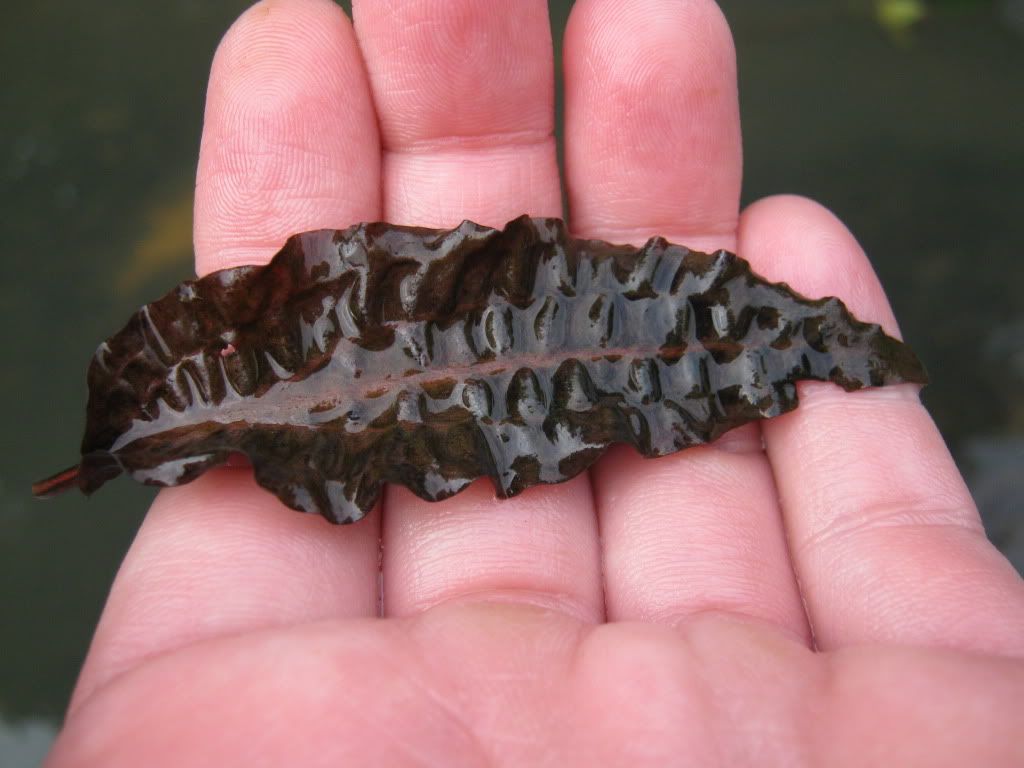
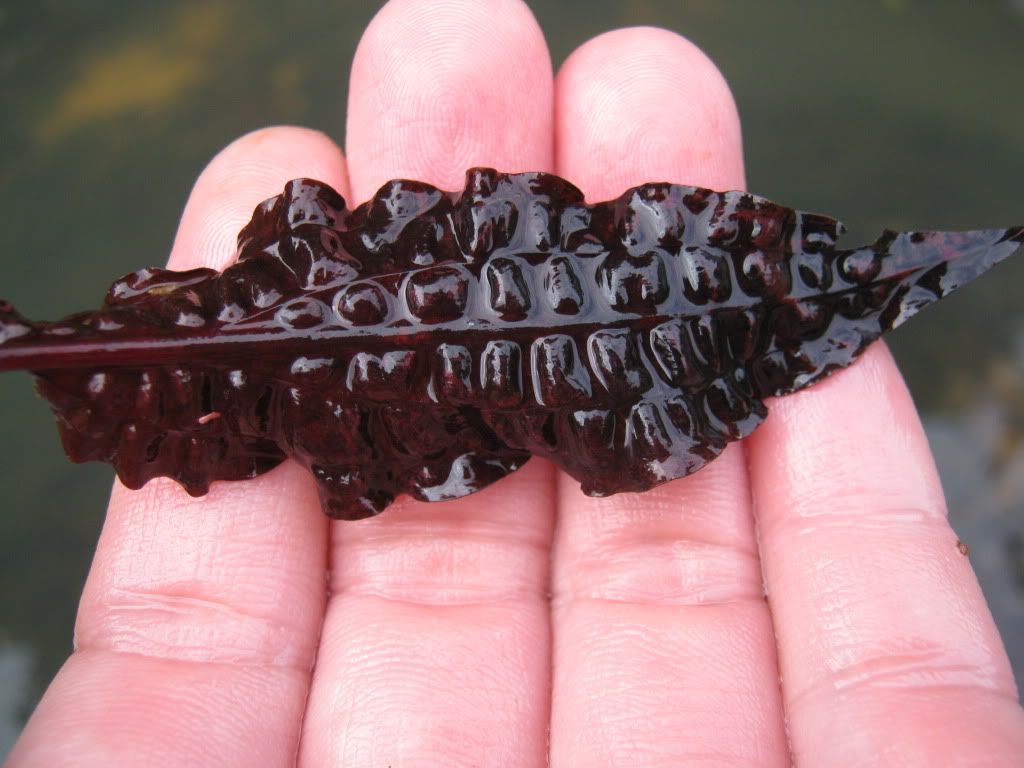
One thing I always liked about visiting habitats with submersed specimens with bullate leaves was the view of how the pockets of undulations on the leaves retained the fine sand particles washed across the leaves by the water.
Specimens with leaves of various degree of redness could be found here.
My photographs above do not bring justice to why my friend termed these specimens as "metallic red" and therefore I imported a photograph taken by my friend and posted on his blog for your reference below.
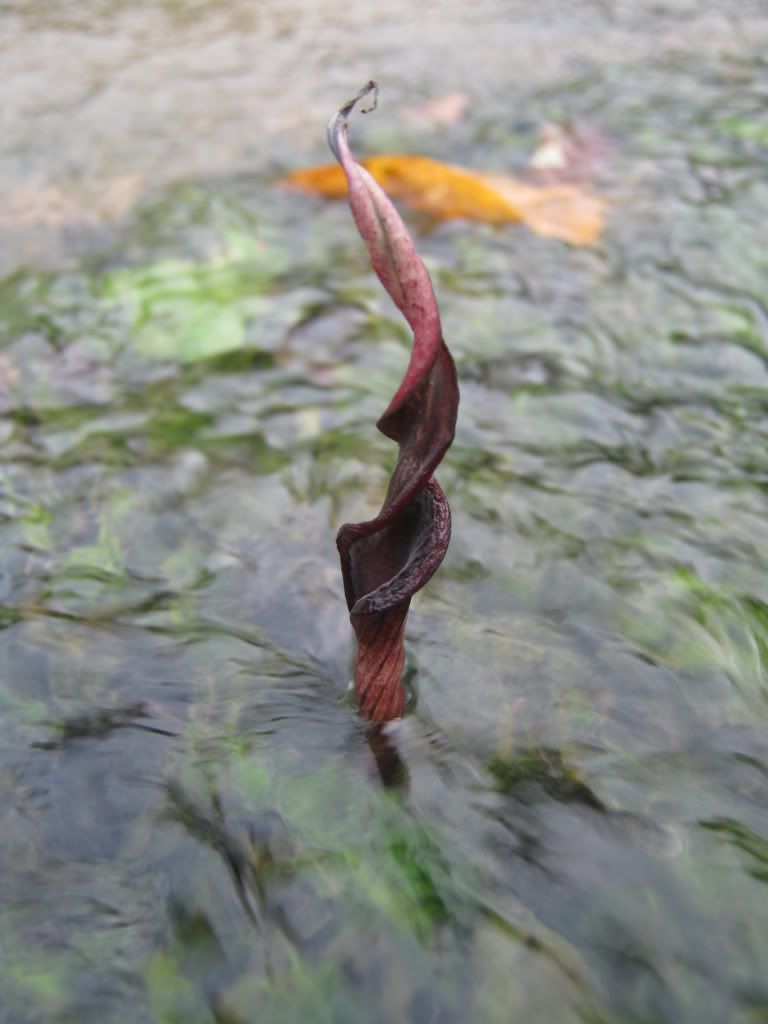
We found many fully blooming spathes here, sticking out of the water for various reasons...
Pahang was rather far from Singapore and we spent a day travelling up to Pahang and staying over for 1 night before commencing our pre "Chinese New Year house visiting" to the various cryptocoryne habitats. After visiting a fresh water lake with "sea-side" banks and a flooded swamp forest, we stayed over at a town flooded with swallows and had dinner and breakfast at the local Chinese coffee shops there.
The first location my friend brought me to visit was the habitat of what he termed as C. affinis 'metallic red' based on the colour of the leaves of the specimens found there. It was a river flowing out of a forest with rather fast flowing water. Carpets of C. affinis could be found in this river.
The river had fine sandy base and a neutral pH.
One thing I always liked about visiting habitats with submersed specimens with bullate leaves was the view of how the pockets of undulations on the leaves retained the fine sand particles washed across the leaves by the water.
Specimens with leaves of various degree of redness could be found here.
My photographs above do not bring justice to why my friend termed these specimens as "metallic red" and therefore I imported a photograph taken by my friend and posted on his blog for your reference below.
We found many fully blooming spathes here, sticking out of the water for various reasons...
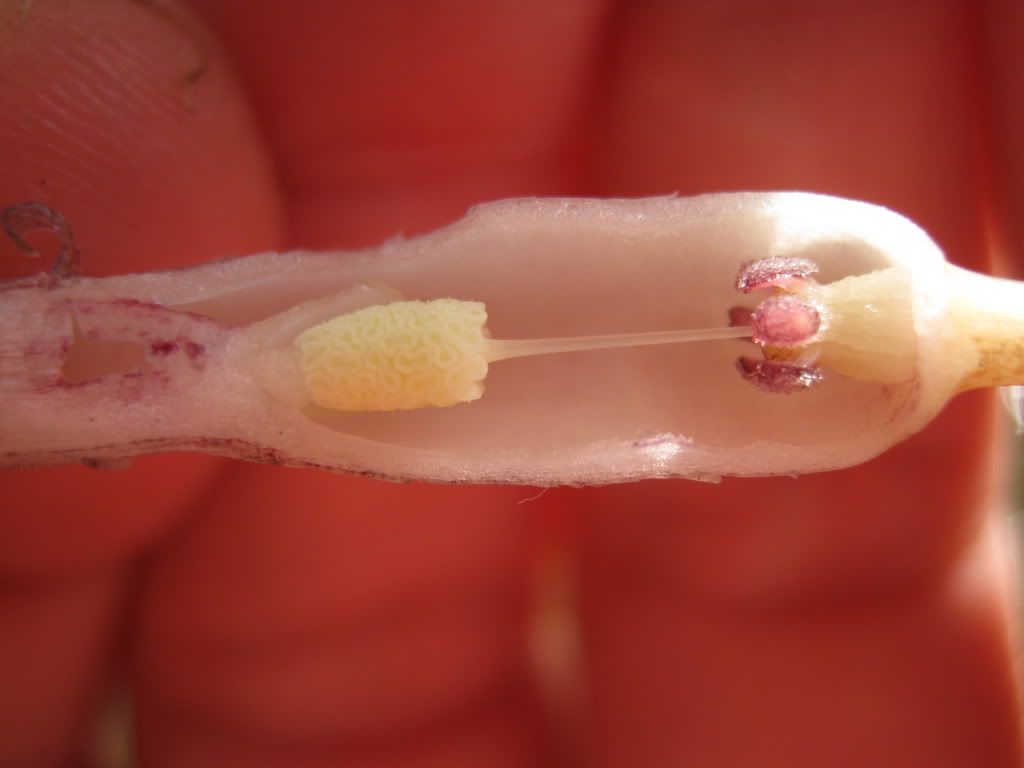
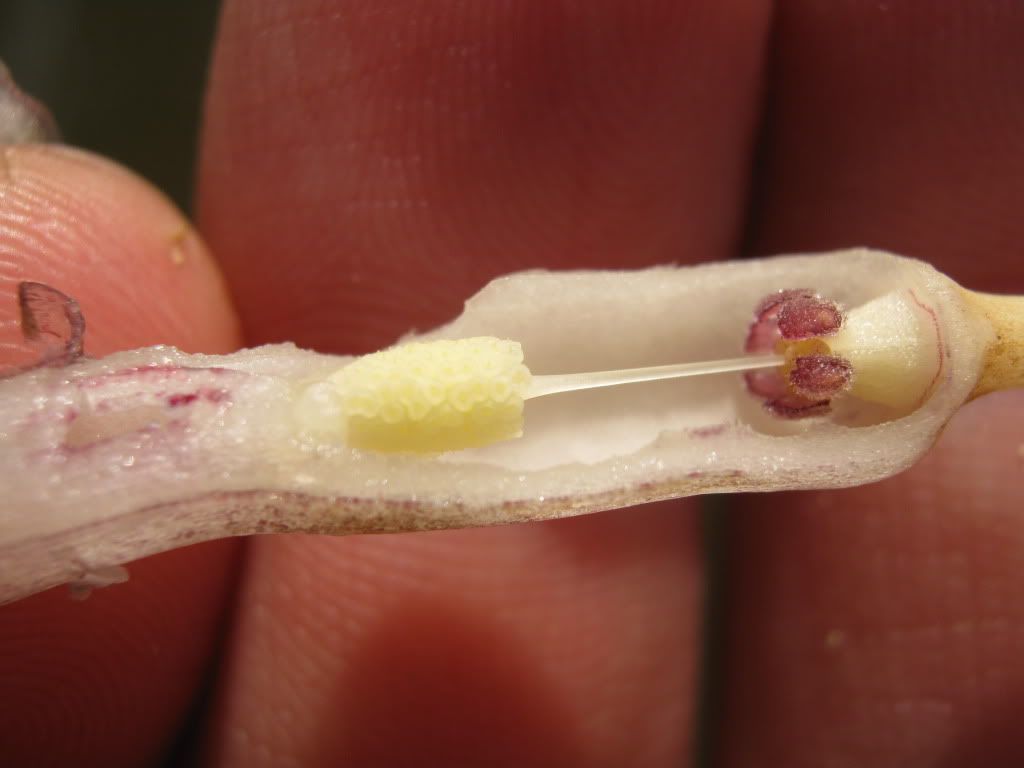
As usual, we cut open the kettle of one of the spathe to capture the photographs of the male and female portion of the flower therein for you reference too.
Other C. affinis found at other habitats around west Pahang will be featured in separate postings.
Thursday, February 3, 2011
Saturday, January 29, 2011
re-visitng C affinis 'West Pahang'
During this trip I also visited C. affinis 'West Pahang' again after a simple lunch of fried bee hoon beside a cat taking a nap.
The habitat is a small river with fast flowing water, below is a video clip of it.
The water level is much lower this time, a large part of the island which was below water previously was now above above the water level. The emersed leaves (could be submersed leaves previous but were now left exposed to the air after the water level fell) photographs are attached below, the leaves were bullate and greenish in colour.
There were portion of the island (i.e. at the edges) which should be more often submersed. The leaves of such area showed a darker colour at the under side.
The bed of the river was sandy and the pH was neutral (i.e. about 7.0) as expected for C. affinis habitats.
As per the previous trip, many flowering specimens could be found here.
A freshwater clam was found too.
The habitat is a small river with fast flowing water, below is a video clip of it.
The water level is much lower this time, a large part of the island which was below water previously was now above above the water level. The emersed leaves (could be submersed leaves previous but were now left exposed to the air after the water level fell) photographs are attached below, the leaves were bullate and greenish in colour.
There were portion of the island (i.e. at the edges) which should be more often submersed. The leaves of such area showed a darker colour at the under side.
The bed of the river was sandy and the pH was neutral (i.e. about 7.0) as expected for C. affinis habitats.
As per the previous trip, many flowering specimens could be found here.
A freshwater clam was found too.
Subscribe to:
Posts (Atom)